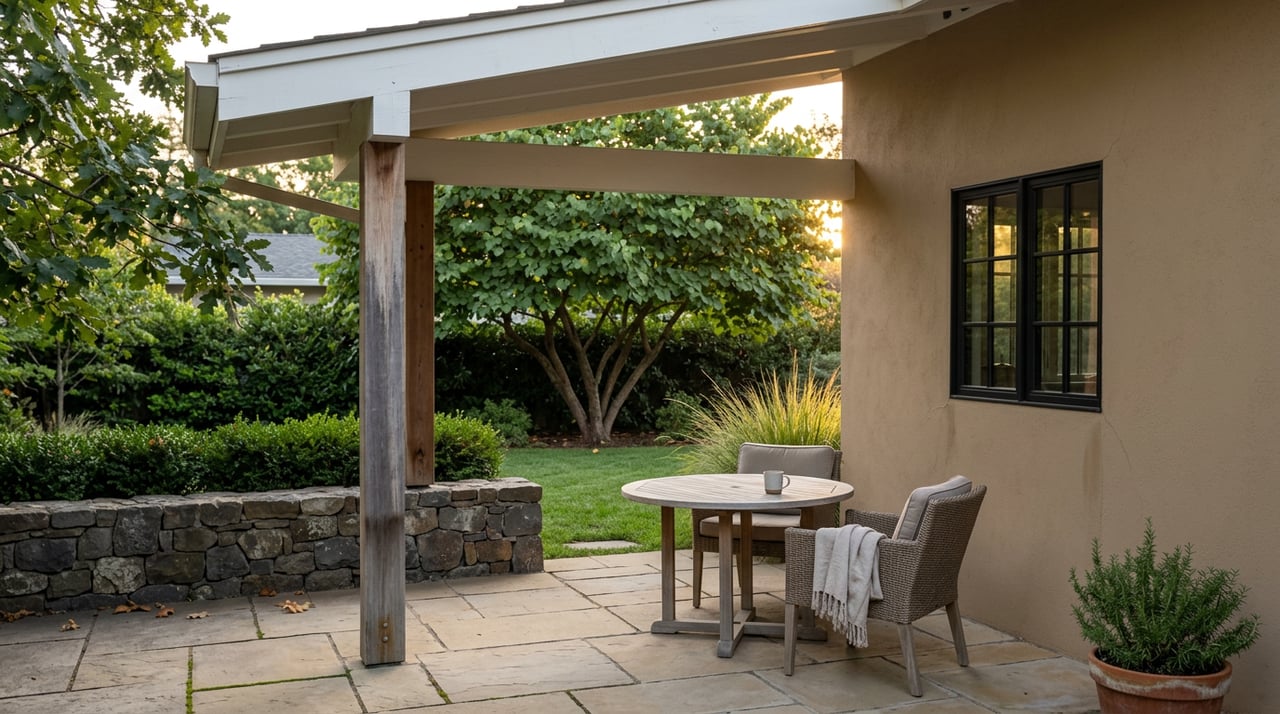
A listing agent describes a cottage near Siskiyou Boulevard as generating steady nightly income from theater-season travelers. The photos show a tidy guest suite, a Planning Action number tucked into the listing remarks, glowing reviews screenshotted into the disclosure packet. A buyer runs the math, factors that income into their offer, and closes escrow assuming the rental business comes with the house.
It doesn't. In Ashland, a short-term rental permit is issued to a person operating under specific conditions, not to a property. When the deed changes hands, so does the requirement to start over.
That distinction sounds like a technicality until you look at what the city's code actually says about it.
The permit is conditional on who lives there, not just where
Ashland calls short-term rentals "Travelers' Accommodations," and the rules live in section 18.2.3.220 of the Ashland Municipal Code. The core requirement isn't about the house at all. It's about the person running the business inside it: the business-owner must reside on the property as their primary residence while the accommodation operates. Not manage it remotely. Not lease it to a third-party host. Live there.
That single requirement explains almost everything else about how these permits behave at closing. A Conditional Use Permit tied to owner-occupancy can't simply pass to whoever signs the closing documents, because the new owner has to satisfy the same residency condition before the permit means anything.
The code says this directly. Transfer of business-ownership of a travelers' accommodation is subject to all the requirements of the section, the same requirements the original owner had to meet. There's no grandfather clause for a new buyer who wants to keep the guest suite running as-is. They start the qualification process from zero.
Four gates, not one
Before residency even becomes a question, a property has to clear a set of structural filters that most listings never spell out for buyers:
- Zoning. Short-term accommodations are prohibited outright in Ashland's single-family zone, R-1. They're only permitted, and only with a Conditional Use Permit, in the R-2 and R-3 multi-family zones.
- Age. The primary residence on the site must be at least 20 years old. A newer infill build in an eligible zone still doesn't qualify.
- Street frontage. The property generally has to sit within 200 feet of a boulevard, avenue, or neighborhood collector, the arterial and collector streets the city names specifically: Siskiyou, North and East Main, Wimer, Iowa, Wightman, Ashland, Mountain, Beach, and Morton.
- Residency. The business-owner has to live there as their primary residence while the accommodation operates, full stop.
A property has to clear all four before a Conditional Use Permit is even worth applying for. Miss one and the rest don't matter.
The Historic District is the one real exception
There's a carve-out worth knowing if you're shopping older Ashland neighborhoods. The 200-foot arterial rule doesn't apply to a Short Term Home Rental sited within the Historic District. City planning discussions around the ordinance spelled this out explicitly: properties in the Historic District are exempt from the street-proximity requirement that governs everywhere else.
That matters because Ashland's Historic District homes tend to be exactly the kind of older, character-rich properties that also clear the 20-year age threshold without effort. Any exterior work on those homes still routes through the Historic Preservation Advisory Committee and Historic Commission review before it's approved, which adds a layer of design scrutiny that a non-historic R-2 property near Siskiyou Boulevard doesn't face. But on the narrow question of street frontage, a Historic District address has more flexibility than the rest of the city.
What this means for the number on the listing
Transfer of business-ownership of a travelers' accommodation shall be subject to all requirements of this section and conform with the criteria of this section.
That's the operative language buyers and sellers both need to sit with before they treat rental income as part of a home's baseline value.
Ashland's home prices have moved briskly in 2026. Over the three months ending in May, the median sale price ran $565,000, up 10.7 percent from the same period a year earlier, with homes averaging just 24 days on market. That's a market where buyers are already competing hard on the fundamentals: bedrooms, lot, location, condition. Layering rental income onto that competition without confirming it survives the closing table is how a buyer ends up overpaying for a business they can't legally run yet, or a seller ends up marketing income they can't guarantee will convey.
The properties that clear all four eligibility gates, correct zone, sufficient age, arterial proximity or Historic District address, and a buyer willing to occupy, are a small subset of Ashland's housing stock. That scarcity is worth more than the median price alone tells you, but only to a buyer who actually qualifies to reapply. For everyone else, the STR angle isn't a value-add. It's a dead end.
Ashland isn't playing by the same rules as Bend or Eugene
If you've shopped short-term rental potential in other Oregon towns, the instinct to assume similar rules apply here is understandable and wrong. Eugene requires registration and tax compliance but doesn't require owner-occupancy or cap the number of rental nights. Bend takes the opposite approach, capping density with a 500-foot separation rule between whole-house rentals in residential zones. Portland runs its own Accessory Short-Term Rental program with steep escalating fines for violations.
Ashland's model doesn't fit neatly into either camp. It isn't capped by density like Bend, and it isn't loosely registered like Eugene. It's gated by a combination of zoning, age, geography, and personal residency that has to be satisfied all at once, and re-satisfied by every new owner who wants to keep the business running. That's a distinct regulatory shape, and treating it like any other Oregon market's rental math is the fastest way to misprice a purchase.
Before you write the offer or set the price
A few checks that belong in due diligence, whichever side of the transaction you're on:
- Confirm the zone. R-2 or R-3 only. R-1 disqualifies the property regardless of what's advertised.
- Verify the home's actual age against the 20-year requirement, not just its renovation history.
- Measure the distance to the nearest qualifying arterial or collector street, or confirm Historic District status if the property sits outside that 200-foot band.
- Ask for the Planning Action number referenced in any current listing advertising and confirm it's active, not expired or tied to a use that no longer applies.
- If you're buying with the intent to keep operating the accommodation, plan on living there as your primary residence and on filing your own Conditional Use Permit application rather than assuming the seller's approval carries forward.
None of this is a reason to avoid an Ashland property with rental history. It's a reason to treat that history as background information rather than a number you can bank on before you've confirmed it survives the sale.
FAQ
Does the Conditional Use Permit show up in a title search? The permit itself is a land use approval on file with the city's Community Development Department, tied to the Planning Action number, not typically a recorded encumbrance you'd find in a standard title search. Buyers should request the Planning Action number directly and confirm current status with the city rather than relying on title work alone.
Can I rent out a room in my Ashland home short-term without going through this process? Even a single room offered on a short-term basis falls under the same Traveler's Accommodation framework and still requires a Conditional Use Permit if the property qualifies. There's no separate, lighter-touch path for renting a single bedroom.
What if the property is in an R-1 zone but I've seen short-term listings there anyway? Short-term accommodations are not permitted in R-1 under current code. A listing operating short-term in a single-family zone without an approved permit would be operating outside the ordinance, which carries enforcement risk for whoever holds the business license, not a reason to assume the use is protected.
Does buying a home with an active permit guarantee I can keep it running? No. The code requires a new business-owner to meet every requirement of the section, including the residency condition, before continuing operation. Plan for a reapplication, not a handoff.
If you're weighing an Ashland property with short-term rental potential, on either side of the closing table, it's worth walking through the zoning, age, and street-frontage math before the number on the listing shapes your offer. Blue Mountain Group works these details daily across Ashland and the wider Rogue Valley. Schedule your free consultation and we'll help you separate what a home is worth from what it's advertised to earn.