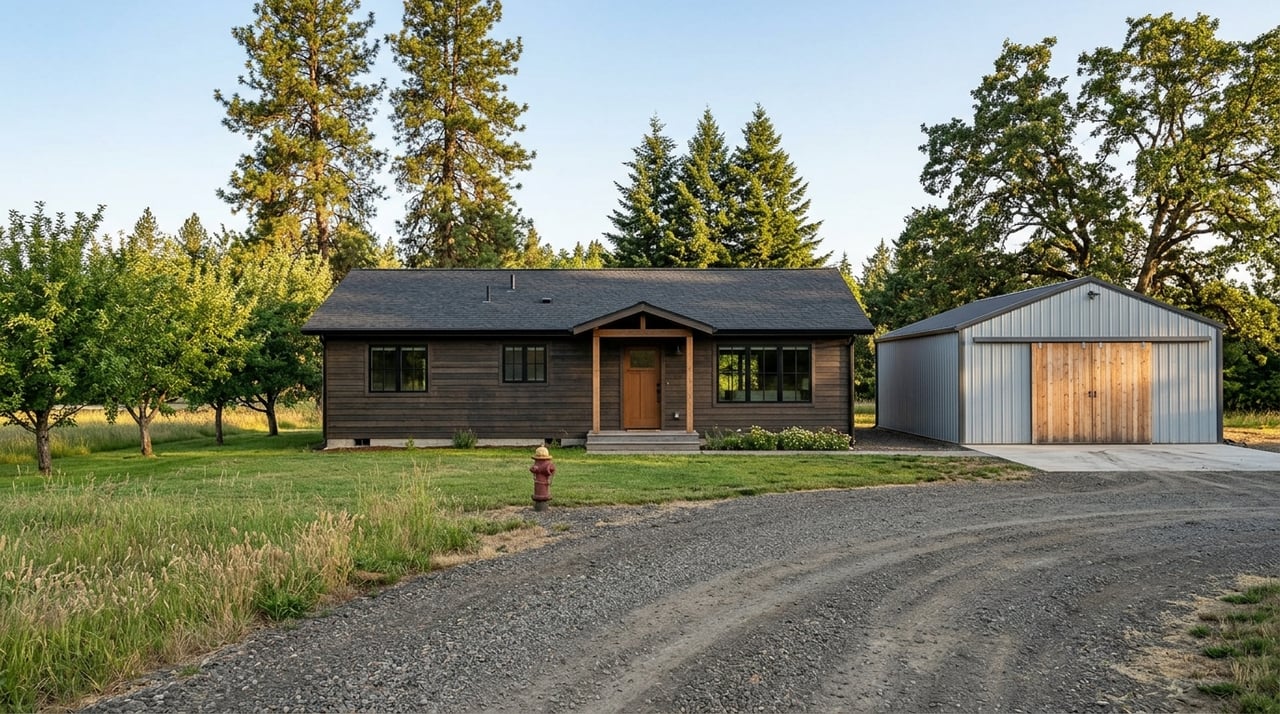
Dreaming about a few usable acres near Central Point sounds simple until you realize one parcel may act like a homesite, while the next falls under a very different set of land rules. If you want room for animals, a garden, outbuildings, or a small hobby farm, you need more than a standard home search. You need to know how zoning, water, septic, and land conditions affect what you can actually do. Let’s break down the big issues you should review before you buy.
Why small acreage varies so much
Around Central Point, small acreage properties can fall under Jackson County rural residential zoning, county resource land rules, or city overlays that add floodplain or riparian limits. That means two properties with similar size and price can have very different use options and approval paths.
For you as a buyer, this is the first big mindset shift. Acreage is not just "more yard." The zoning, overlays, and site conditions help determine whether you can add structures, keep the setup you want, or use the land the way you pictured.
Know the zoning before you fall in love
Jackson County includes several rural residential districts such as RR-2.5, RR-5, RR-5(A), RR-10, and RR-00. The county also has resource districts like EFU, FR, WR, OSR, and AR, which are governed more tightly than ordinary rural residential, urban residential, commercial, and industrial districts.
Minimum parcel sizes also vary by zone. Jackson County lists minimum parcel sizes of 2.5 acres for RR-2.5, 5 acres for RR-5 and RR-5(A), 10 acres for RR-10, and 80 acres for the resource districts.
What that means for your plans
If you are shopping for a hobby farm, workshop space, or room for livestock, zoning should be one of your first checks, not something you review after inspections. A parcel may look ideal online, but the underlying rules may limit future uses or require a more involved review process.
This matters even more if the property includes barns, sheds, shops, or other outbuildings. Jackson County states that primary and accessory structures are subject to dimensional standards, and added setbacks may apply near irrigation ditches, canals, streams, and fuelbreaks.
Don’t assume existing outbuildings are problem-free
Before you close, ask whether outbuildings were properly permitted and whether they meet setback requirements. If your plan includes adding a barn, shop, or other structure later, verify how much buildable area is actually available.
That simple step can save you from buying land that looks flexible but has tighter limits than expected. In acreage purchases, the details on paper matter just as much as the space you see in person.
ADUs can be possible, but conditions apply
Accessory dwelling units may be allowed outside an urban growth boundary in Jackson County RR zones, but the rules are specific. The parcel must be at least 2 acres, only one detached single-family dwelling may already exist on the lot, and the ADU is capped at 900 square feet.
The ADU also has to meet setback rules along with fire-safety and floodplain or overlay requirements. If an ADU is part of your long-term plan, confirm those standards early so you know whether the parcel fits your goals.
Central Point overlays can change what you can build
If a property sits inside Central Point city limits or near sensitive water areas, the city’s Environmental Overlay may limit development near flood hazard areas, stream corridors, wetlands, and related habitat areas. Central Point states that riparian corridors are measured 50 feet from the top of bank on both sides.
That can affect where structures, additions, or site improvements may go. A lot that looks wide open may still have portions you need to leave undisturbed.
Water is more than having a well
Many small acreage buyers focus on whether a property has a private well. That is important, but it is only part of the picture.
In Oregon, private wells are not maintained or regulated by state or county government, and the owner is responsible for testing, maintenance, and treatment. The Oregon Health Authority says the only way to know whether well water is safe is to test it through an accredited laboratory.
What sellers must test in a sale
For a property sale with a domestic well, the seller or their representative must test for arsenic, nitrate, and total coliform bacteria. They must also submit the required form and results to the Oregon Health Authority within 90 days.
Some properties are exempt from these testing rules, including those with spring wells, irrigation-only wells, and undeveloped land. If you are buying land without a home, ask what type of water source exists and whether any testing requirement applies.
Irrigation rights are a separate question
This is one of the biggest points hobby-farm buyers miss. A domestic well may support the house, a small lawn or garden, and livestock watering, but that does not automatically give you the right to irrigate crops for sale.
Oregon generally requires a water-right permit or license to use groundwater or surface water for irrigation. Exempt domestic groundwater use can include a noncommercial lawn or garden up to one-half acre, stock watering, and domestic use up to 15,000 gallons per day, but commercial crop irrigation is not exempt.
If your vision includes rows of berries, a market garden, hay production, or other income-producing use, verify whether irrigation rights exist and whether they match your intended use. Water rights generally transfer with the land when a farm is sold, so it is important to confirm what is actually attached to the property.
Septic can make or break a property
On small acreage, septic review is just as important as water review. The Oregon Department of Environmental Quality advises buyers to ask whether the septic system was installed with a permit, whether maintenance and pumping records are available, where the drainfield and replacement area are located, and whether the system is properly sized for the household.
DEQ also recommends having a qualified inspector evaluate the system before purchase. Regular inspections can help identify problems before they turn into major repair costs.
Undeveloped land needs extra review
If you are buying bare land or a parcel with unclear septic history, ask for a septic site evaluation before closing. DEQ states that a site evaluation determines the size, type, and location of the septic system, and a construction permit follows after that.
This matters because some sites with high groundwater or poor soils may require more complex septic systems. A lower purchase price can lose its appeal quickly if the site needs costly septic work.
Match the land to your livestock goals
A few acres can work well for animals, but not every property is ready for that use on day one. Pasture quality, weed pressure, drainage, and layout all affect how manageable the property will be.
OSU Extension recommends rotational grazing and notes that pasture generally should be grazed only after grass reaches about 6 to 8 inches and not below 3 inches. Overgrazing and undergrazing both create problems over time.
Think beyond fencing and shelter
If horses are part of your plan, OSU Extension recommends a dry lot or sacrifice area to help prevent overgrazing. The guidance also recommends buffer strips to protect creeks, surface water, and wellheads from runoff from paddocks or manure piles.
That is worth keeping in mind when you tour a property. A place may have enough acreage on paper, but the practical setup for animals may still need work.
Soil quality matters more than you think
Some soils are suited to a wider range of crops, while others are better for permanent pasture, forestland, or wildlife areas. OSU Extension advises buyers to match soil capability and water availability to the intended use before buying.
Soil testing also matters once you own the property. For pasture fertility, OSU Extension notes that soil tests should be done every 2 to 3 years.
Flood risk deserves a close look
Central Point reports that the city is affected by stream and urban flooding. The city identifies Bear, Griffin, Jackson, Mingus, Horn, Daisy, and Elk Creek as streams susceptible to annual flooding.
The city also reports 203 acres and 395 parcels in the high-risk 1% annual-chance floodplain. If the property you are considering sits near a creek, low-lying area, or mapped hazard area, flood review should happen early in your due diligence.
Why this matters before you buy
Central Point provides free flood map information for specific properties, including maps showing flood hazard areas, flood elevations, water depth, and flood history. That can help you understand whether a parcel has added constraints before you move too far into the process.
If a land division or development proposal affects the floodplain, Central Point says mitigation is required and the process can take time. In some cases, buyers may need input from specialists such as hydraulic engineers, surveyors, or environmental professionals.
Wildfire planning is part of acreage ownership
Rural and edge-of-town properties often come with more vegetation, more exposure, and more responsibility. The Oregon State Fire Marshal advises that homes in the wildland-urban interface should have defensible space zones of 0 to 5 feet, 5 to 30 feet, and 30 to 100+ feet around structures.
That does not mean every acreage property is a poor fit. It means you should look at vegetation, access, outbuilding placement, and maintenance demands with open eyes before you buy.
A smart pre-offer checklist for Central Point acreage
If you are serious about buying small acreage or a hobby farm around Central Point, keep your due diligence practical and local. A good pre-offer review often includes:
- Confirm the zoning and whether the parcel is in county rural land, inside city limits, or near an urban growth boundary
- Check for environmental overlays, including floodplain and riparian limits
- Review well records and current water quality information
- Ask whether a domestic well sale test applies
- Verify whether any irrigation or other water rights exist
- Review septic permits, site evaluations, and inspection or pumping records
- Confirm the location of drainfields and replacement areas
- Ask whether outbuildings were permitted and meet setback standards
- Consider pasture condition, drainage, runoff patterns, and animal setup
- Review wildfire exposure and defensible space needs
Why local guidance matters in acreage deals
Acreage purchases usually involve more moving parts than a typical in-town home search. You may need to coordinate with inspectors, land-use professionals, water-rights contacts, surveyors, or environmental consultants depending on the property.
That is why process clarity matters so much. When you understand the land first, you can move forward with more confidence and avoid expensive surprises after closing.
If you are weighing small acreage or hobby farm options around Central Point, the right strategy is to slow down, ask better questions, and verify how the property works in real life. When you want clear guidance on land, homes, and acreage across Jackson County, reach out to Blue Mountain Group.
FAQs
What zoning should I check when buying small acreage near Central Point?
- You should confirm whether the property is in a Jackson County rural residential zone, a resource district, or an area affected by Central Point overlays such as floodplain or riparian rules.
What should I know about wells on a hobby farm property in Oregon?
- Private well owners are responsible for testing, maintenance, and treatment, and for a sale involving a domestic well, the seller generally must test for arsenic, nitrate, and total coliform bacteria.
Can a domestic well irrigate crops on Central Point acreage?
- Not automatically. A domestic well may cover household use, some livestock watering, and a noncommercial lawn or garden up to one-half acre, but irrigation for crops for sale generally requires a water right.
What septic questions should I ask before buying Jackson County acreage?
- Ask whether the system was permitted, whether maintenance and pumping records are available, where the drainfield and replacement area are located, and whether a qualified inspector has evaluated the system.
Are ADUs allowed on rural residential land near Central Point?
- They can be allowed in Jackson County RR zones outside an urban growth boundary if the parcel is at least 2 acres, only one detached single-family dwelling already exists, and the ADU meets size, setback, fire-safety, and overlay requirements.
How do I check flood risk for acreage in Central Point?
- Central Point provides free flood map information for specific properties, including flood hazard areas, elevations, water depth, and flood history, which can help you assess risk early in the buying process.