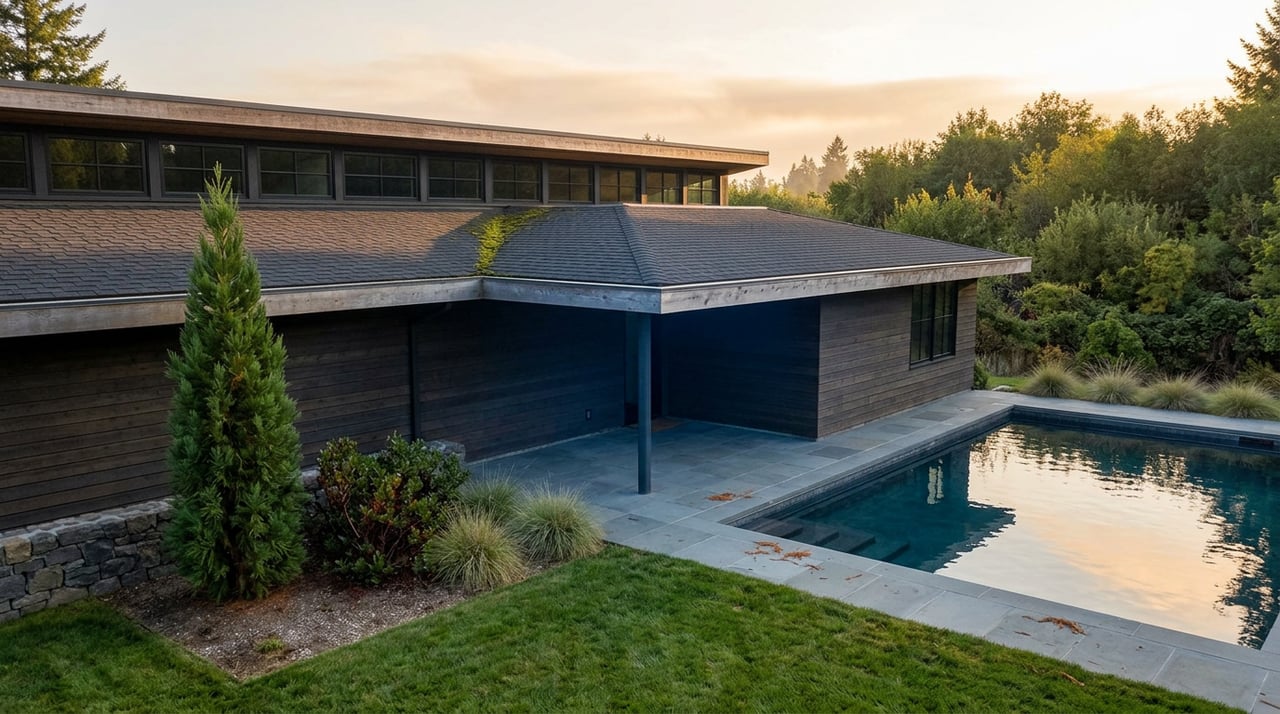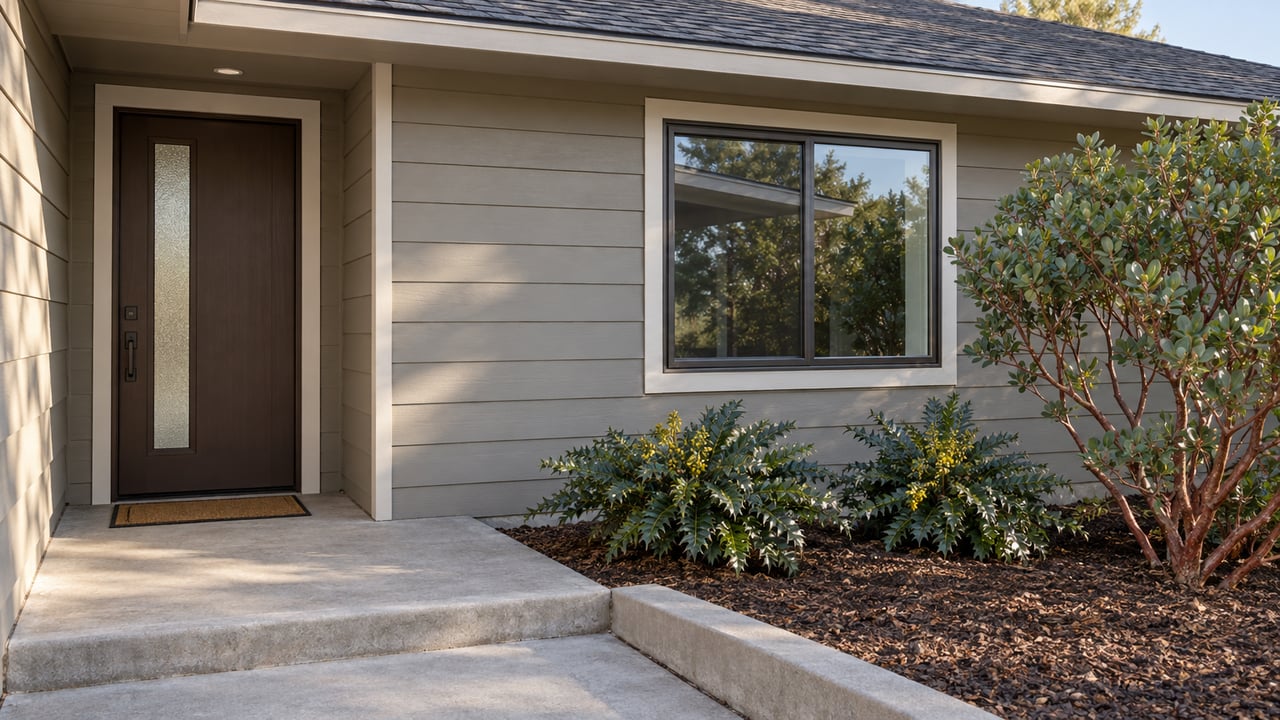
Picture two houses for sale in Medford this fall, both listed close to $450,000, both three bedrooms, both around the same square footage. One sits a few blocks off East Main, built before 1990 and owned by the same family for twenty years. The other is new construction in one of the subdivisions filling in south Medford. The sale price on the closing paperwork will look almost identical. The property tax line will not.
That gap has nothing to do with the school district, the city limits, or the size of the lot. It comes down to a mechanic in Oregon's tax code that most listing sheets never explain: the number on a Medford home's tax statement describes how long the house has been owned and what's been built or added since, not what a buyer is about to pay for it.
The Number on the Listing Sheet Is Someone Else's History
Every property in Jackson County carries two separate values. Real Market Value is the county assessor's estimate of what the home would sell for as of January 1 each year. Maximum Assessed Value is a different number entirely, created by Ballot Measure 50 in 1997, when the state rolled every property's taxable value back to its 1995-96 level minus 10 percent and locked future growth at no more than 3 percent a year. The Assessed Value, the figure your bill is actually calculated on, is whichever of the two is lower.
For most Medford homes, that's been the Maximum Assessed Value for close to three decades, because home prices have climbed faster than 3 percent a year for most of that stretch. The tax statement that lands in an owner's mailbox every October shows both numbers side by side, and the gap between them is exactly what a buyer needs to understand before comparing two listings by price alone.
Oregon Doesn't Reset the Bill at Closing
A lot of buyer advice written for a national audience assumes a home's taxable value jumps to the purchase price the moment escrow closes. That's how California's Proposition 13 works, and it's the model most generic real estate content defaults to. Oregon doesn't work that way.
Multnomah County's own assessor office puts it plainly on its property assessment FAQ page: "Property values and taxes on real property are tied to the property, not the owner." The Oregon Legislature's Legislative Revenue Office reached the same conclusion in its review of Measure 50, noting that assessed value "is not adjusted back to market value when property changes hands." A buyer who closes on a longtime-owned Medford home inherits the seller's Maximum Assessed Value and its 3 percent climb, continuing from wherever the seller left it, not from the number on the settlement statement.
That's good news for buyers of older homes. It's also the reason the tax estimate printed on a resale listing is a fairly honest preview of what a buyer will actually owe next year, plus a few percent, rather than a number that's about to reset upward.
What the Gap Looks Like Inside One City
Medford's own ZIP codes show how far apart two otherwise comparable pockets of the same city can land. Property tax data compiled this year for Medford by Ownwell shows a real spread between the older, established side of town and the newer construction corridor to the south:
| Medford ZIP code | Median effective tax rate | Median annual tax bill |
|---|---|---|
| 97501 (central/older housing stock) | 0.77% | $2,321 |
| 97504 (south Medford) | 0.87% | $3,737 |
That's a difference of roughly $1,416 a year, or about $118 a month, between two ZIP codes in the same city. It isn't a verdict on which neighborhood is more desirable. It's a reflection of assessment vintage. Homes in 97501 have had decades for the gap between Real Market Value and Maximum Assessed Value to widen under the 3 percent cap. Newer construction in the 97504 corridor entered the tax rolls only recently, so it's still sitting much closer to full market value.
Why New Construction Doesn't Get the Same Deal
The 3 percent cap only protects a property going forward from the value it already has. A short list of events lets Maximum Assessed Value jump above that 3 percent ceiling in a single year: new construction, a major remodel or addition, subdividing a lot, or rezoning. New homes are appraised using what the state calls a changed property ratio, a formula that brings new construction in line with what existing properties in the same class are already paying as a percentage of market value, rather than the deep discount a 25-year-old assessment has built up. Routine maintenance doesn't trigger this. Clatsop County's assessor office notes that ordinary upkeep, like a new roof or a kitchen refresh with comparable finishes, isn't added to assessed value. An addition or a ground-up remodel is a different story.
That's the whole explanation for the south Medford versus East Main comparison. The new-construction home was appraised close to today's market value the year it was built. The older home near downtown has been quietly capped at 3 percent growth since long before either buyer started house hunting.
What This Means When You're Comparing Two Listings
A buyer weighing a resale against new construction at the same price point is really weighing two different starting points on the tax rolls. The resale's current tax bill is close to what a buyer will pay going forward. The new build's tax bill will also only grow 3 percent a year from here, but it started that climb from a much higher number, because it never had the benefit of a 1997 rollback or decades of capped growth.
Before comparing two Medford homes on price alone, it's worth pulling the actual assessed value and real market value for each parcel through Jackson County's own GIS parcel search, rather than relying on a national tax estimator built around a different state's rules. The two numbers on that page tell a buyer more about the monthly carrying cost than the listing price does.
Assessed value is not adjusted back to market value when property changes hands.
The December 31 Appeal Window Won't Close This Gap
Jackson County mails tax statements in late October, and property owners have until December 31 to petition the county's Property Value Appeals Board if they believe the Real Market Value on the statement is too high. It's worth knowing what that appeal can and can't do. The board only has authority to adjust Real Market Value, based on evidence like recent comparable sales. If a property's Assessed Value is already sitting on its Maximum Assessed Value, which is the case for most long-held Medford homes, a successful RMV appeal changes nothing on the bill unless the reduced RMV actually falls below the existing MAV. For a new-construction buyer whose Assessed Value and Real Market Value are close together, an appeal has a real shot at moving the number. For the buyer of a decades-old resale, it usually doesn't, because the MAV is already doing the work.
A Few Questions Buyers Ask Once They See This
If I buy an older Medford home, do I get the exact same tax bill the seller had? Close to it, with one wrinkle. Oregon's property tax year runs July 1 through June 30, not the calendar year, so depending on when a sale closes relative to that cycle, a new owner's first full bill can differ slightly from the seller's last one even though the Maximum Assessed Value itself didn't change.
Will remodeling the kitchen or replacing the roof push my taxes up to market value? Not on its own. Ordinary maintenance and repairs, including a new roof or a kitchen update using comparable finishes, aren't added to assessed value. A genuine addition, a major remodel, or new square footage is a different category and can trigger a reassessment exception.
Can I check a specific Medford home's assessed value before writing an offer? Yes. Jackson County's GIS parcel search shows both the Real Market Value and the Assessed Value on file for any address in the county, which is the clearest way to see how close a listing's price is to its actual tax basis before comparing it against another home.
Understanding how a Medford tax bill actually behaves is one more way to read a listing the way a longtime local would, and it's exactly the kind of detail worth walking through before you're comparing two houses side by side. If you're weighing a resale near downtown against new construction farther south and want to know what each one will really cost you month to month, Blue Mountain Group is glad to pull the numbers with you.